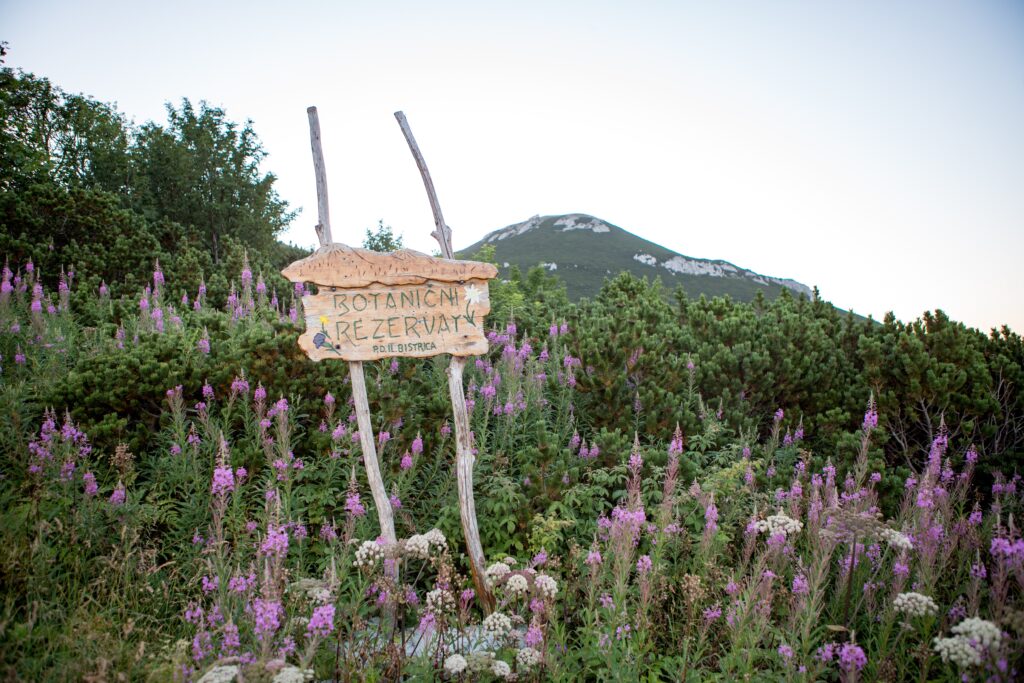
Mt. Snežnik, at 1,796 m, is Slovenia’s highest non-Alpine mountain and forms an ecological bridge between Mediterranean and continental Europe. It is a predominantly carbonate, high-karst mountain with limited surface water, extensive forest cover, subalpine grasslands, rocky screes, and dwarf-pine belts above the treeline. The Snežnik–Ždrocle forest reserve includes upper montane and subalpine beech forests shaped by strong winds, persistent snow cover, and harsh temperatures, including distinctive stunted “sabre” beech forms. The wider Snežnik–Javorniki area is part of Natura 2000 and supports large carnivores, specialist forest birds, and rare or endemic plants of summit grasslands and screes. Its main pressures are visitor concentration, erosion, shrub encroachment, and disturbance of sensitive forest-reserve and summit habitats.