

Participatory approach in planning sustainable management of natural resources in mountain areas (Rama, Kupres, Posušje and Sarajevo)
Picture8_25
Picture8_25b
| Title | Participatory approach in planning sustainable management of natural resources in mountain areas (Rama, Kupres, Posušje and Sarajevo) |
|---|---|
| Short description of the practice | Participatory planning and management of natural resources through dialogue between experts, local communities, and institutions for sustainable spatial development. |
| Keywords | Participation, Sustainable development, Natural resources, Local community, Environmental protection, Cooperation |
| Organisation in charge of the good practice | The combination of best practices was adopted from activities implemented by the municipalities of Rama, Kupres and Posušje, as well as the public institution Jahorina |
| Implementation level of the practice | Level: Select from National / Regional / Local
Country: Bosnia and Herzegovina Region: Central Bosnia, nothern and southwestern Herzegovina City: Rama, Kupres, Posušje and Sarajevo |
| Website | alr.ba/wp-content/uploads/2016/08/L-E-A-P.pdf
opcina-posusje.ba/wp-content/uploads/2017/03/leap-posusje-finalni-nacrt.pdf |
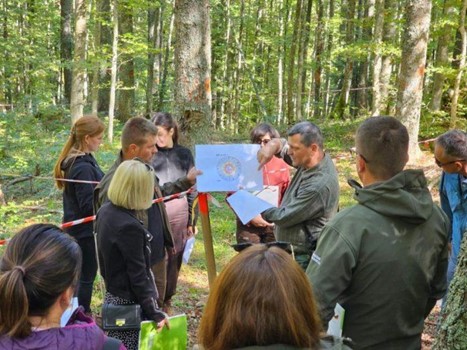
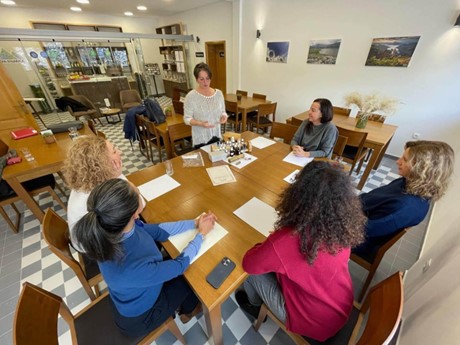
| Detailed information on the practice | In the areas of the municipalities of Posušje, Prozor-Rama and Kreševo, good practice of participatory planning for sustainable management of natural resources has been implemented. Through workshops, analyses and educational activities, experts involved local stakeholders – citizens, representatives of institutions, public utility services, schools, health institutions, farmers, livestock breeders, mountaineering associations, tourist boards and non-governmental organizations. Joint efforts identified the main spatial problems, such as uncontrolled logging, illegal construction, unplanned picnic zones, waste disposal, and excessive collection of medicinal plants and forest products. Based on the collected information and in accordance with the Law on Nature Protection of the Federation of Bosnia and Herzegovina, sectoral measures were proposed: planned reforestation of barren areas, controlled logging, pasture management and monitoring of seasonal grazing, control of picnic zones, removal of illegal landfills, introduction of anti-erosion measures on slopes, and supervision of the collection of medicinal plants and mushrooms. These activities contributed to a better understanding of spatial processes, strengthened cooperation between local institutions and users, and created a basis for employing additional experts in environmental protection services. The practice has shown that community involvement and expert dialogue ensure sustainable solutions and increase the responsibility of all space users for the preservation of natural values. |
| Timeframe | The implementation and monitoring of this good practice require approximately 18 to 24 months through the following phases:
-3–4 months – Preparation and setup of activities: formation of working groups, data collection, situation analysis, and workshop planning -8–10 months – Education and implementation of participatory workshops: involvement of local stakeholders, collection of proposals, and development of sectoral measures -6–10 months – Application and monitoring of measures: implementation of pilot activities (reforestation, landfill control, education) and establishment of a monitoring system |
| Approximate cost | The assessment and implementation of best practices, including resources, materia, and all other relevant costs, amounts to approximately 200,000 € |
| Results achieved | The practice has been successful because, through more than 10 workshops and public discussions, it involved over 150 participants from different sectors, identified 25 problems, and proposed 32 measures for sustainable resource management. Actions for reforestation and landfill removal were implemented, and cooperation between institutions and the community was established. Citizen participation in planning increased by 40%, confirming the effectiveness and sustainability of the practice. |
| Potential for learning or transfer | This practice is interesting for learning in other regions because it demonstrates how a participatory approach and the involvement of local stakeholders enable the development of sustainable and applicable solutions for natural resource management. Key success factors include the active participation of all space users – citizens, farmers, livestock breeders, institutions, and non-governmental organizations – combined with expert analysis of the situation and local knowledge and experience. Successful implementation also requires alignment of measures with national and local legislation. Potential challenges in transferring the practice include limited financial resources, lack of institutional support, and low community motivation. However, the experiences from the municipalities of Posušje, Prozor-Rama, and Kreševo have already served as a model for similar activities in the mountainous areas of western Herzegovina and central Bosnia. The methodology is flexible and can be adapted to different spatial and social contexts, enabling participatory resource management and strengthening shared responsibility for the preservation of natural values. |
| Additional material | |
| Contact person | A contact person should be indicated for each good practice submitted to the programme.
Name: Zvonimir Marić Affiliation: Municipality of Neum Email: odsjekzaprojekte@gmail.com |