
KRAS.RE.VITA: Restoration of Karst Wetlands and Meadows in the Notranjska Region
Picture8_22
| Title | KRAS.RE.VITA: Restoration of Karst Wetlands and Meadows in the Notranjska Region |
|---|---|
| Short description of the practice | A comprehensive habitat restoration initiative enhancing biodiversity and sustainable land use in Slovenia’s karst wetlands. |
| Keywords | karst, wetland restoration, Natura 2000, biodiversity, sustainable land use, habitat conservation |
| Organisation in charge of the good practice | Notranjska Regional Park (Notranjski regijski park) |
| Implementation level of the practice | Level: Regional
Country: Slovenia Region: Primorsko-notranjska City: Cerknica, Planina – Postojna, Logatec |
| Website | https://www.kras.notranjski-park.si/planinsko-polje/projektne-aktivnosti/ |
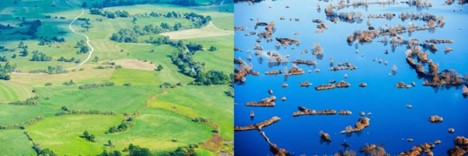
| Detailed information on the practice | KRAS.RE.VITA is a nature conservation project co-financed by the European Regional Development Fund and the Republic of Slovenia. It aims to improve the conservation status of key habitat types and species within the Natura 2000 site known as the Notranjska Triangle, encompassing Lake Cerknica and Planinsko polje.
Key restoration activities include: Hydrological Restoration: Re-meandering of the Stržen River at Lake Cerknica and infilling of drainage ditches at Planinsko polje to restore natural water regimes. Habitat Management: Mowing and removal of invasive species to maintain open wet meadows and prevent overgrowth. Infrastructure Development: Establishment of visitor infrastructure, such as observation towers and educational trails, to promote sustainable tourism and environmental education. Community Engagement: Collaboration with local farmers and landowners through stewardship agreements to ensure the long-term maintenance of restored habitats. Target species benefiting from these efforts include the corncrake (Crex crex), Eurasian bittern (Botaurus stellaris), and various bat species, among others. |
| Timeframe | 2018 – 2023 |
| Approximate cost | Approximately €2,000,000 (including planning, implementation, monitoring, and educational activities) |
| Results achieved |
|
| Potential for learning or transfer | KRAS.RE.VITA serves as a model for integrated habitat restoration in karst landscapes. Its holistic approach—combining ecological restoration, sustainable land use, and community involvement—is transferable to other regions facing similar environmental challenges. Key success factors include stakeholder engagement, adaptive management, and securing long-term funding mechanisms. |
| Additional material | |
| Contact person | A contact person should be indicated for each good practice submitted to the programme.
Name: Leon Kebe Affiliation: Notranjski park Email: info@notranjski-park.si |