

Guide to Mushroom Cultivation on Logs in Mediterranean Silvopasture Systems
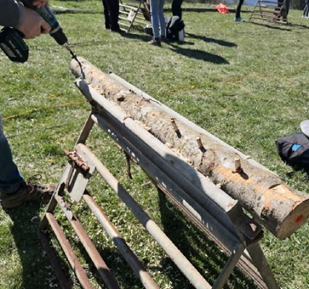
opening of the holes and introduction of the mycelium (dowels)
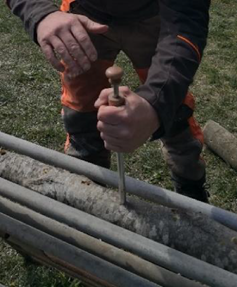
opening of the holes and introduction of the mycelium (inoculator)
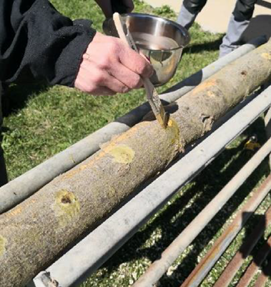
cover with hot wax to avoid drying out
| Title | Guide to Mushroom Cultivation on Logs in Mediterranean Silvopasture Systems |
|---|---|
| Short description of the practice | Efficient cultivation of mushrooms on pruning logs in Mediterranean dehesa silvopasture systems, providing sustainable food and income from by-products. |
| Keywords | mushroom cultivation, silvopasture, pruning logs, Mediterranean, dehesa, LIFE Regenerate |
| Organisation in charge of the good practice | IDForest – Biotecnología Forestal Aplicada S.L., within the LIFE Regenerate project |
| Implementation level of the practice | Level: Regional Country: Spain Region: Mediterranean (Dehesa systems) City: Salamanca (IDForest HQ) |
| Website | https://regenerate.eu/?utm_source=chatgpt.com |
| Detailed information on the practice | This practice addresses the challenge of adding value to pruning by-products in Mediterranean dehesa silvopasture systems. Traditional methods using pruning chips for mushroom cultivation were energy- and cost-intensive. Instead, using logs from pruning or thinning as substrates for edible mushrooms proved more efficient and sustainable. Logs of oak, poplar, and other local species are inoculated with edible fungi (shiitake, oyster, reishi, etc.), incubated for up to a year, and then induced to fruit, producing marketable mushrooms. The method provides landowners with a new income stream while recycling low-value wood. Stakeholders : IDForest, landowners, farmers, forestry operators, LIFE Regenerate partners. Beneficiarie s: silvopasture farmers, rural communities, and consumers seeking sustainable local products. |
| Timeframe | Incubation of inoculated logs: about 1 year. Productive lifespan of dense wood logs : up to 4 years, with 2–3 harvests annually. |
| Approximate cost | Not specified in the guide. Costs vary by scale, but log-based systems are significantly less energy- and cost-intensive than chip-based ones. |
| Results achieved | Demonstrated viability of mushroom production in dehesa systems: efficient log-based cultivation with multiple years of production, creating new economic opportunities for landowners |
| Potential for learning or transfer | The practice is easily transferable to other Mediterranean or silvopasture systems worldwide. It shows how low-value pruning residues can be transformed into a valuable product, providing ecological, social, and economic benefits. With minor adaptations, it can also be replicated in temperate agroforestry systems. |
| Additional material | Full guide: Biotecnología Forestal Aplicada, Guide to mushroom cultivation on logs obtained from pruning in Mediterranean silvopasture systems (2022). |
| Contact person | Name: — Affiliation: IDForest – Biotecnología Forestal Aplicada S.L. Email: info@idforest.es |