

Ecological Restoration of Ski-Runs
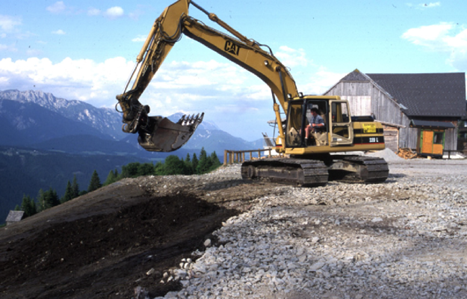
Restoration site at Tauplitz, Austria, 1800 m a.s.l. The available topsoil was carefully collected and redistributed.
| Title | Ecological Restoration of Ski-Runs |
|---|---|
| Short description of the practice | A method combining site-specific seed mixtures and high-quality techniques to restore ski-runs in the Alps, ensuring erosion control and ecological stability. |
| Keywords | Erosion control, ski-runs, ecological restoration, high-altitude, site-specific seeds, re-vegetation |
| Organisation in charge of the good practice | AREC Agricultural Research and Education Centre Raumberg-Gumpenstein (Austria), in collaboration with BOKU University of Natural Resources and Applied Life Sciences (Vienna) |
| Implementation level of the practice | Level: Regional Country: Austria (applied also in Alpine regions of Germany, Italy, Switzerland) Region: Alpine Region City: Irdning (headquarters) |
| Website | https://raumberg-gumpenstein.at/?utm_source=chatgpt.com |
| Detailed information on the practice | In the European Alps, thousands of hectares are leveled yearly for tourism, requiring restoration. At higher altitudes, conventional methods and cheap non-site-specific seed mixtures cause severe ecological damage, including erosion, drainage issues, vegetation loss, and costly maintenance. The practice presented uses a combination of site-specific alpine seed/plant mixtures and high-quality application techniques (mulch seeding, hydro-seeding, hay-mulch transfer, geotextiles, sod rolls, vegetation transplantation). These ensure soil stabilization, reduce erosion, and establish sustainable, self-regenerating alpine vegetation. Stakeholders: AREC Raumberg-Gumpenstein, BOKU University, local Alpine communities, seed producers, farmers managing alpine meadows. Beneficiaries: local communities (reduced costs), tourism sector (stable ski-runs), environment (restored alpine ecosystems). |
| Timeframe | Research and trials have been ongoing since the 1990s. Restoration projects typically require 2–3 vegetation periods for stable establishment. Long-term monitoring is recommended for 5–10 years. |
| Approximate cost | Not explicitly stated in the paper. Costs vary depending on slope, elevation, and methods (mulch/geotextile use, sod rolls, or site-specific seeds). |
| Results achieved | Trials across Austria, Italy, Switzerland, and Germany proved that site-specific seed mixtures combined with advanced techniques ensure >70% vegetation cover, erosion stability, reduced fertiliser needs, and long-term ecological adaptation. |
| Potential for learning or transfer | The approach demonstrates that only site-specific vegetation ensures durable ecological restoration at high elevations. Lessons include: careful topsoil conservation, using local donor hay, site-specific seed mixtures, and erosion control techniques. The method is transferable to other mountainous regions facing ski-run erosion or infrastructure impacts. Its principles can also apply to road slopes, alpine construction sites, and high-altitude restoration worldwide. |
| Additional material | The full article: Krautzer, B. et al. (2013). Ecological Restoration of Ski-Runs. In: The Impact of Skiing on Mountain Environments. |
| Contact person | Name: Dr. Bernhard Krautzer Affiliation: AREC Agricultural Research and Education Centre Raumberg-Gumpenstein, Irdning, Austria Email: bernhard.krautzer@raumberg-gumpenstein.at |