| Short description of the practice |
A deep learning approach using drone imagery detects toxic Colchicum autumnale flowers in grasslands, enabling site-specific, non-chemical weed control. |
| Keywords |
Colchicum autumnale, drone imagery, convolutional neural networks, object detection, grassland management, precision agriculture |
| Organisation in charge of the good practice |
Institute of Stochastics, Ulm University, Germany Hochschule für Wirtschaft und Umwelt Nürtingen-Geislingen, Germany |
| Implementation level of the practice |
Level: Regional/National Country: Germany Region: Baden-Württemberg City: Ulm / Nürtingen |
| Website |
https://doi.org/10.1007/s11119-020-09721-7?utm_source=chatgpt.com |
| Detailed information on the practice |
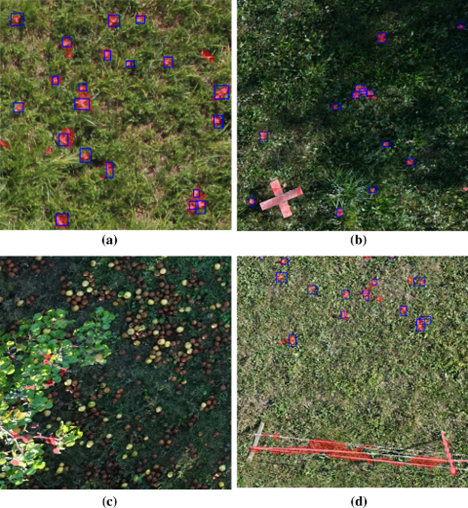
Colchicum autumnale (meadow saffron) is a toxic plant proliferating in extensively managed meadows and pastures, posing risks to livestock when ingested through hay and silage. Herbicides and intensive management are restricted due to environmental protection requirements. Thus, a non-chemical, site-specific method is needed. This practice presents a deep learning approach applied to drone images captured with a standard RGB camera. Using convolutional neural networks (a modified U-Net), the system detects individual flowers in grasslands. Training data (8,100 flowers labeled) was enhanced with image augmentation. Models were tested both on random splits and on previously unseen grassland sites to simulate real-world applications. Stakeholders: Ulm University, Nürtingen-Geislingen University, local landscape conservation associations. Beneficiaries: farmers, land managers, biodiversity and fauna conservation, livestock safety. |
| Timeframe |
Images collected: August–October 2018. Method developed and validated in 2020. Can be applied annually during flowering periods. |
| Approximate cost |
Not specified. Requires drone platform (MK ARF-OktoXL octocopter), high-resolution RGB camera (Sony Alpha 7 RII), labeling software, and computing resources for deep learning. |
| Results achieved |
Random split: 88.6% of flowers detected, recall 0.986, F2-score 0.861. Site-specific tests: recall between 0.869–0.965 across sites; precision varied (0.16–0.85) due to interfering objects (trees, fences). Overall robust detection in grassy areas, with stable recall and acceptable false positive rates. |
| Potential for learning or transfer |
Demonstrates the feasibility of automated detection of toxic plants in grasslands using drones and machine learning. Transferable to other invasive or harmful plant species. Provides farmers with application maps for targeted, non-chemical weed control, reducing herbicide use and protecting biodiversity. Future integration with automated treatment tools is possible. |
| Additional material |
Full article: Petrich, L. et al. (2020). Detection of Colchicum autumnale in Drone Images Using a Machine-Learning Approach. Precision Agriculture 21:1291–1303. |
| Contact person |
Name: Lukas Petrich Affiliation: Institute of Stochastics, Ulm University Email: lukas.petrich@uni-ulm.de |