
Conservation of priority forests and forest openings in “Ethnikos Drymos Oitis” and “Oros Kallidromo” of Sterea Ellada
Picture8_23
| Title | Conservation of priority forests and forest openings in “Ethnikos Drymos Oitis” and “Oros Kallidromo” of Sterea Ellada |
|---|---|
| Short description of the practice | A complete methodology for seed collection, handling, storage, and germination to support the ex situ conservation of keystone species in protected habitats. |
| Keywords | Ex situ conservation; Seed banking; Seed collection ; Habitat restoration |
| Organisation in charge of the good practice | National and Kapodistrian University of Athens |
| Implementation level of the practice | Level: Select from National / Regional
Country:Greece Region:Sterea Ellada (Central Greece) City: Central Greece |
| Website | https://docs.google.com/document/d/1mxMDsUxqUSrQ247JeB8Rs-TGb4JfdCp6/edit#heading=h.c7bkjxg08k9c |
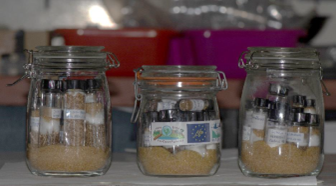
| Detailed information on the practice | The practice addresses the urgent need to conserve the genetic material of keystone species from priority habitats in Mt. Oiti and Mt. Kallidromo, where temporary ponds (3170*) and mountain grasslands (6210*, 6230*) face ecological pressures. Ex situ conservation complements in situ efforts by safeguarding species against catastrophic events and enabling future restoration actions. The practice establishes a full seed-banking system, including protocols for seed collection, handling, cleaning, storage, and germination testing. Seed collections were carried out between 2013–2019 for 10 temporary pond species and 28 mountain grassland species. All seeds were manually cleaned, air-dried, afterripened, and stored at −20°C following ENSCONET standards. Germination behaviour was studied extensively under varying temperatures, light conditions, stratification regimes, and GA₃ treatments to identify optimal germination conditions and dormancy-breaking strategies. This scientific approach supports long-term conservation, ensures continuous monitoring of seed viability, and enables propagation of selected species for habitat restoration. Stakeholders include NKUA researchers, seed-bank technicians, Natura 2000 site managers, and conservation bodies. Beneficiaries are protected habitats, restoration projects, and biodiversity conservation efforts. |
| Timeframe | Seed collections conducted 2013–2019, followed by ongoing storage and viability monitoring. The practice is long-term and continuous, as seedbanks require periodic viability testing and replenishment. |
| Approximate cost | Not specified in the article |
| Results achieved | A functional seedbank was created for 38 keystone species (10 temporary pond species, 28 mountain grassland species). Optimal germination protocols were identified for most species, with several achieving >80% germination after appropriate stratification/afterripening. The practice ensures long-term conservation, restoration capacity, and scientific knowledge for protected habitats. |
| Potential for learning or transfer | This practice offers strong transfer potential for Natura 2000 sites and protected areas facing habitat degradation. Its value lies in clear, reproducible protocols for seed collection, cleaning, storage, and germination testing, all aligned with ENSCONET standards. The approach demonstrates how ex situ seedbanks can support restoration, monitor viability, and provide resilience against catastrophic events. Transferability is facilitated by detailed methodology, adaptable stratification protocols, and evidence-based germination results covering a wide range of species with different dormancy types. Regions with temporary ponds, mountain grasslands, or similar Mediterranean habitats can replicate the seedbank methods and incorporate them into conservation strategies. Success factors include: strong scientific oversight, controlled storage at −20°C, systematic viability testing, and integration with in situ restoration actions. Barriers may include lack of laboratory infrastructure or insufficient seed availability for rare species. |
| Additional material | |
| Contact person | Name: Evangelia Skourti |